
 Image 1 of 3
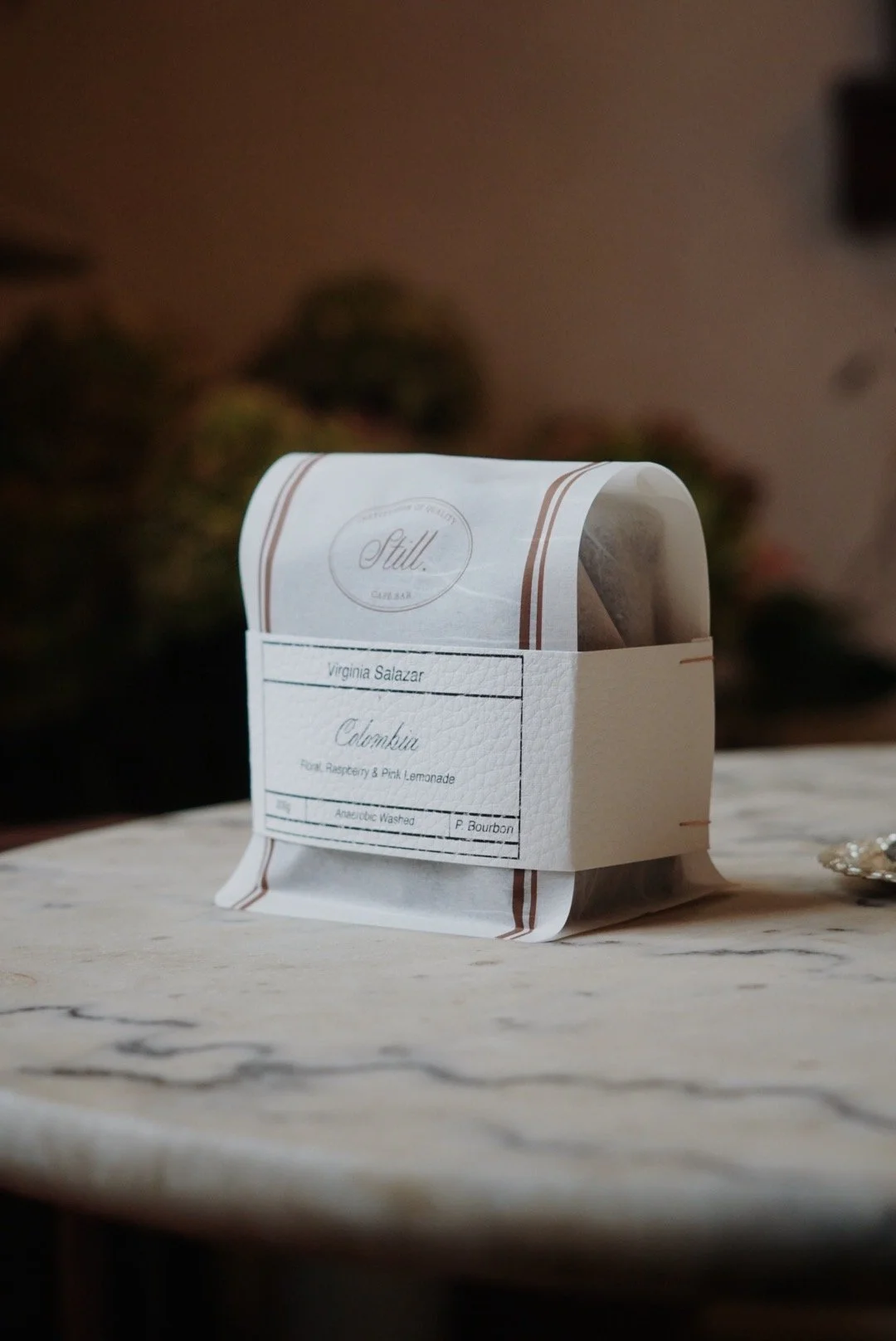 Image 2 of 3
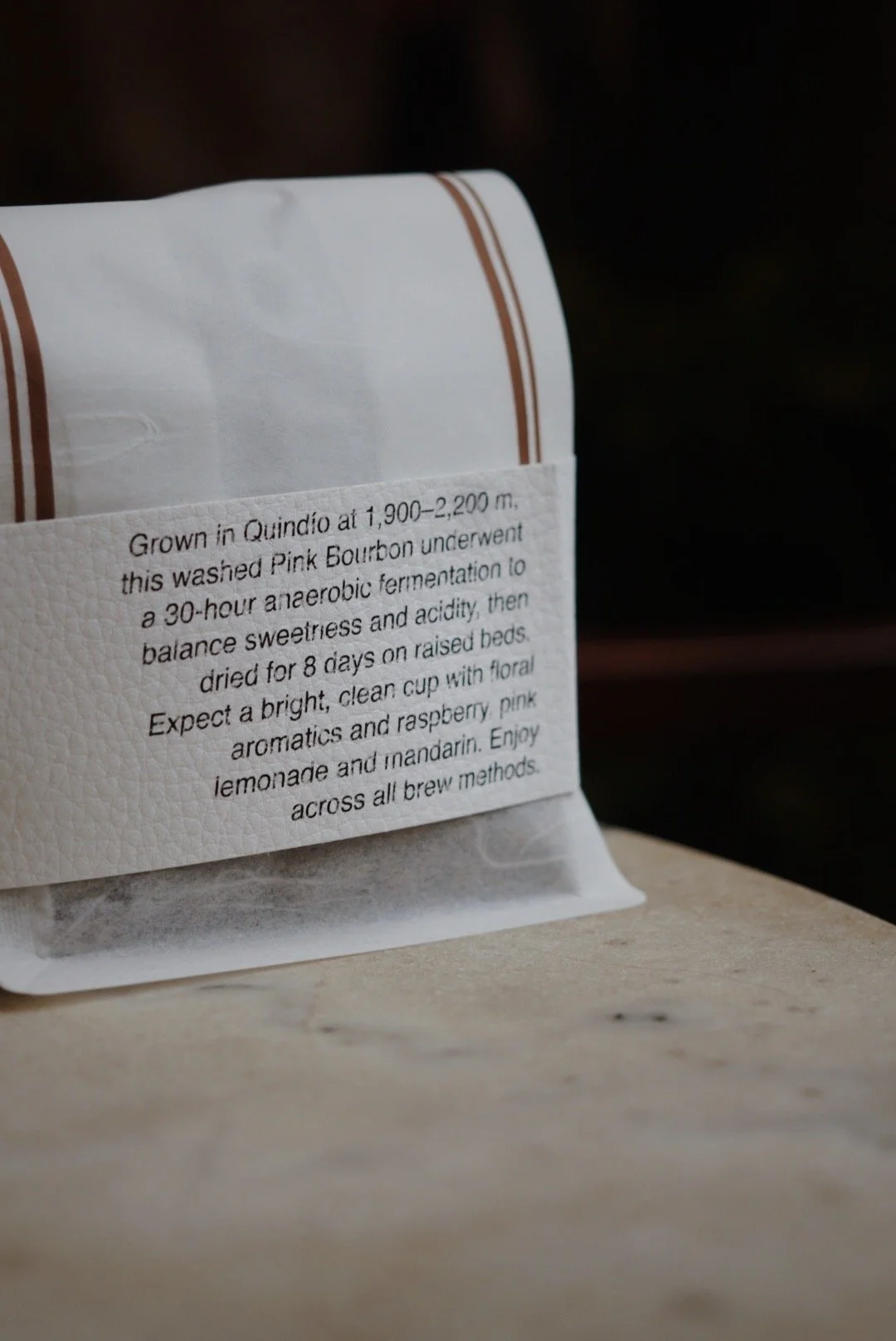 Image 3 of 3
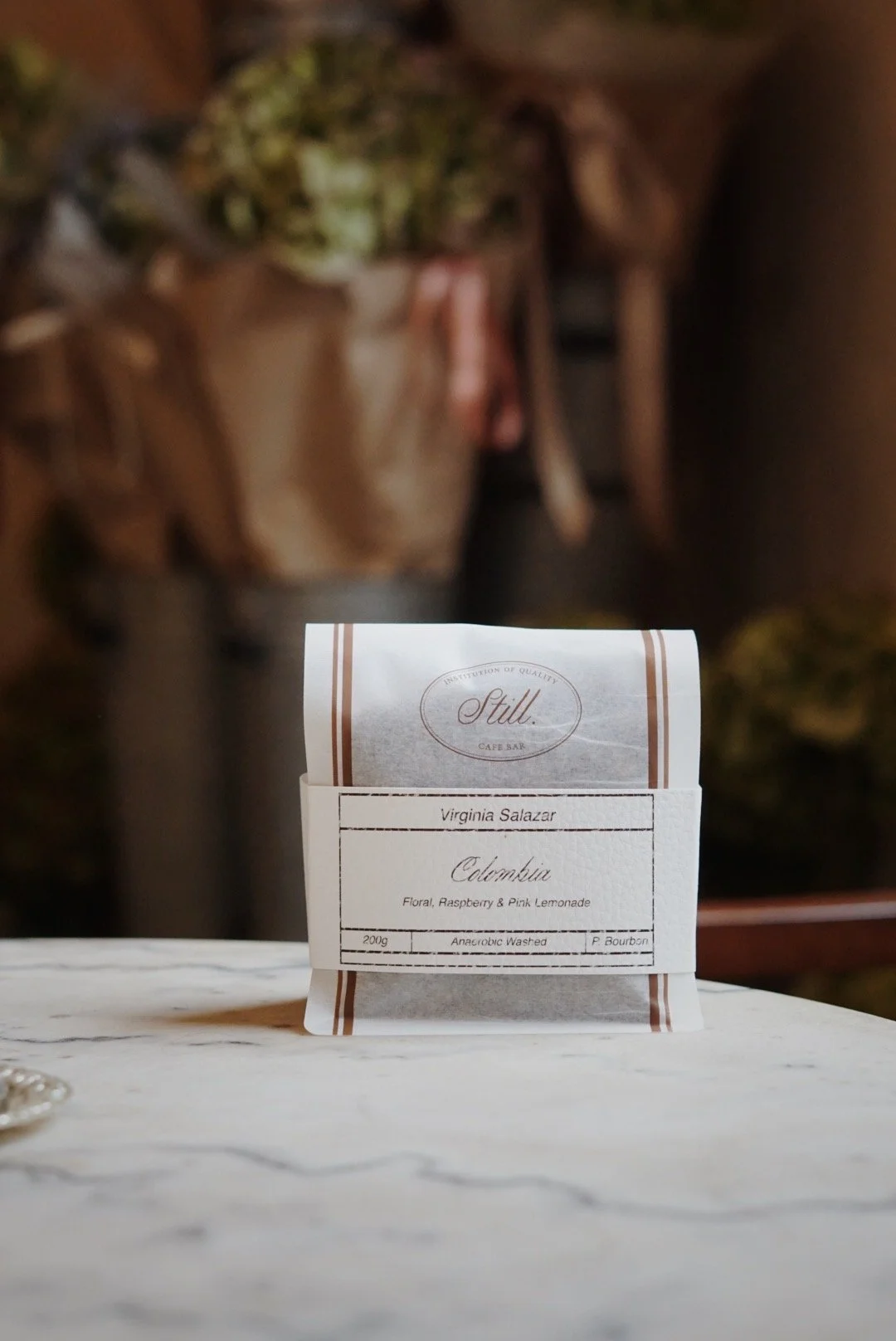
Colombia, Virginia Salazar
Floral, Raspberry & Pink Lemonade
Varietal : Pink Bourbon
Process : Anaerobic Washed
Altitude : 2000MASL
SCA : 88.5
With its reddish-pink cherry hue and exceptional cup quality, the Pink Bourbon variety has earned a reputation for being both visually striking and remarkably flavourful. While its exact origins remain unconfirmed, it is widely believed to have emerged as a natural mutation at 2,100 m.a.s.l. in the San Adolfo region of Huila, Colombia, around 1980. Its high-altitude birthplace has made Pink Bourbon a favourite among coffee farmers and roasters. Initially, Pink Bourbon was thought to be a mutation of the Red and Yellow Bourbon varieties. However, some researchers have challenged this theory, proposing instead that Pink Bourbon may trace its lineage to an Ethiopian landrace variety.
Pink Bourbon variety is adaptable to specific growing conditions. Pink Bourbon is a high- altitude coffee variety, thriving best at elevations between 1,700 to 2,100 m.a.s.l. This elevation range is crucial for developing the complex flavours and vibrant acidity that Pink Bourbon is known for.
Pink Bourbon trees are typically medium in height. This compact size makes them easier to manage and harvest compared to taller varieties.
Pink Bourbon is susceptible to certain coffee diseases, such as coffee leaf rust and coffee berry disease. Farmers must implement careful disease management practices to protect their crops.
Pink Bourbon is known for its sweet, fruity, and floral notes, often accompanied by a vibrant acidity and a silky body.
Stature: medium | Average Altitude: 1700 – 2100 m.a.s.l. | Tolerant to drought, tolerant to leaf rust
Virginia, and the team of pickers selectively harvest only the ripest cherries. The cherries are then transported to La Uníon sorting area, where the team meticulously hand-sorts and float them to eliminate any low-density, underripe, or defective beans. Once sorted, the coffee cherries are packaged in grain pro bags and transported to Cofinet’s processing center, La Pradera. Once at La Pradera, we continue with our quality protocols of sorting. We start by placing coffee cherries in water tanks to float them and to remove any low-density beans and external material.
Afterwards, the cherries undergo a 30-hour underwater fermentation—a critical step that enhances the coffee's flavor profile. We do this controlled fermentation process as it allows the sugars, organic acids, and other compounds within the cherries to break down gradually, stimulating the development of a delicate yet interesting profile.
The 30-hour fermentation period is carefully calibrated to strike the perfect balance between developing flavor complexity and preserving the coffee's inherent qualities. This results in a harmonious balance of sweetness and acidity, giving our washed coffees a bright and lively character.
After fermentation, the cherries are pulped, and the mucilage is thoroughly washed away. The water used in our washing process is recycled and reused for floating subsequent batches of cherries.
The wastewater generated during our washed process is then treated using our green filtration system. This system filters the water through a series of specialized tanks before irrigating it into vetiver grass beds. Through this natural filtration process, the water is purified and released as oxygen. As a result, no contaminated water is discharged from our processing center, ensuring an environmentally sustainable operation.
Once coffees are washed, they are spread out on raised beds in greenhouses when they are exotic varieties or in our elbas drying station
The team monitors them closely to ensure even drying and optimal quality. We aim for 9.5%- 11% moisture content, which is the perfect point for us.
Floral, Raspberry & Pink Lemonade
Varietal : Pink Bourbon
Process : Anaerobic Washed
Altitude : 2000MASL
SCA : 88.5
With its reddish-pink cherry hue and exceptional cup quality, the Pink Bourbon variety has earned a reputation for being both visually striking and remarkably flavourful. While its exact origins remain unconfirmed, it is widely believed to have emerged as a natural mutation at 2,100 m.a.s.l. in the San Adolfo region of Huila, Colombia, around 1980. Its high-altitude birthplace has made Pink Bourbon a favourite among coffee farmers and roasters. Initially, Pink Bourbon was thought to be a mutation of the Red and Yellow Bourbon varieties. However, some researchers have challenged this theory, proposing instead that Pink Bourbon may trace its lineage to an Ethiopian landrace variety.
Pink Bourbon variety is adaptable to specific growing conditions. Pink Bourbon is a high- altitude coffee variety, thriving best at elevations between 1,700 to 2,100 m.a.s.l. This elevation range is crucial for developing the complex flavours and vibrant acidity that Pink Bourbon is known for.
Pink Bourbon trees are typically medium in height. This compact size makes them easier to manage and harvest compared to taller varieties.
Pink Bourbon is susceptible to certain coffee diseases, such as coffee leaf rust and coffee berry disease. Farmers must implement careful disease management practices to protect their crops.
Pink Bourbon is known for its sweet, fruity, and floral notes, often accompanied by a vibrant acidity and a silky body.
Stature: medium | Average Altitude: 1700 – 2100 m.a.s.l. | Tolerant to drought, tolerant to leaf rust
Virginia, and the team of pickers selectively harvest only the ripest cherries. The cherries are then transported to La Uníon sorting area, where the team meticulously hand-sorts and float them to eliminate any low-density, underripe, or defective beans. Once sorted, the coffee cherries are packaged in grain pro bags and transported to Cofinet’s processing center, La Pradera. Once at La Pradera, we continue with our quality protocols of sorting. We start by placing coffee cherries in water tanks to float them and to remove any low-density beans and external material.
Afterwards, the cherries undergo a 30-hour underwater fermentation—a critical step that enhances the coffee's flavor profile. We do this controlled fermentation process as it allows the sugars, organic acids, and other compounds within the cherries to break down gradually, stimulating the development of a delicate yet interesting profile.
The 30-hour fermentation period is carefully calibrated to strike the perfect balance between developing flavor complexity and preserving the coffee's inherent qualities. This results in a harmonious balance of sweetness and acidity, giving our washed coffees a bright and lively character.
After fermentation, the cherries are pulped, and the mucilage is thoroughly washed away. The water used in our washing process is recycled and reused for floating subsequent batches of cherries.
The wastewater generated during our washed process is then treated using our green filtration system. This system filters the water through a series of specialized tanks before irrigating it into vetiver grass beds. Through this natural filtration process, the water is purified and released as oxygen. As a result, no contaminated water is discharged from our processing center, ensuring an environmentally sustainable operation.
Once coffees are washed, they are spread out on raised beds in greenhouses when they are exotic varieties or in our elbas drying station
The team monitors them closely to ensure even drying and optimal quality. We aim for 9.5%- 11% moisture content, which is the perfect point for us.